
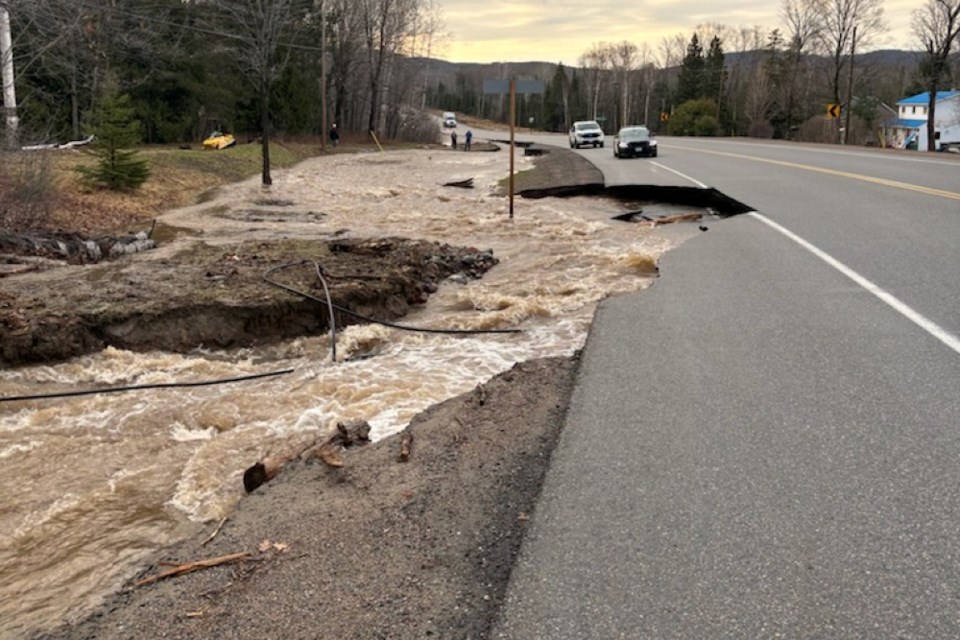
SooToday received the following letter from a reader in response to an article about the Northeast Superior Mayors Group seeking a meeting with the province over extended highway closures.
The recent flooding north of Sault Ste. Marie, and the increasing frequency of road closures due to climate change any time of the year, are powerful reminders that governments have consistently failed to take climate change, or its adverse impacts, seriously.
The recent flooding is only the latest adverse impact. Others include increasing global temperatures with 2024 shattering every monthly record and 2025 on track to come a close second, more frequent summer heat waves in Northern Ontario, wildfire smoke smothering our health and outdoor activities while burning for months (and continuing to burn for years below ground), increased incidents of extreme weather, greater precipitation and, perhaps counterintuitively, colder temperature extremes in Northern Ontario winters.
It's tempting to say the planet is on fire and no one cares. In reality, all these little fires that keep popping up – cost of living, wars, tariffs, the growth of authoritarianism, poverty and inequality, pollution, heat waves, crumbling healthcare – are all related to the same causes. Humans exceeding seven of nine key planetary boundaries such as climate change (one boundary overshoot should trigger serious global alarm bells).
The backwards response by decision makers is what some term the polycrisis.
It's probably safe to say we all care. The problem is politicians and our current structures can't get it right.
The media must bear some of the blame for inaction too. By failing to cover this issue as the crisis it is (were any of the last year's closures linked directly to climate change?), or failing to connect the dots to our excess consumerism and growth (e.g. critique Bills 5 and C-5 and the Northern Growth Plan), media has contributed to this state of public paralysis.
Indeed, a recent poll from Abacus suggests that while people feel very concerned about climate change, it has slipped to eighth place of thirteen, with cost of living and U.S. tariffs leading concerns. Yet all thirteen concerns are directly caused by exceeding planetary limits, and our inverted responses to these crises. That led Abacus to wonder if respondents were suffering from a 'scarcity mindset' (a polite way of saying we are ignoring reality and acting irrationally).
Right on cue, the Northeast Superior Mayors Group has now requested a meeting with the province about road closures, “asking the Province to expedite the reopening of highways." Instead of a solution, the mayors are literally asking that the province make the polycrisis worse and relieve political pressure for solutions.
Equally absurd, FONOM has called for more roads to exacerbate the problems. At the risk of sounding rude, this is nothing short of unhinged.
By aggravating the problem, these government bodies are exposing themselves to repercussions from the recent ICJ ruling.
A few weeks ago, some U.S. republicans blamed Canada for wildfire smoke suffocating the U.S. We might smugly laugh at the hypocrisy, but isn't that exactly what these Canadian mayors, and our profligate consumerism, are contributing to?
SooToday asked for responses to road closures. In the context of this reality, obvious and simple actions in the national interest to deal with the recent Northern highway closures would be to construct public passenger and freight rail for intercity movement that is resilient to the effects of climate change, and shift funding from roads (including subsidies for foolish tunnels under the 401), to public investments such as rail, while taking immediate actions to get people out of private vehicles, and goods out of trucks, by providing options.
The best time to act was 40 years ago when the science and warnings were clear. The next best time is today.
Robert Rattle
Sault Ste. Marie